Showing posts with label vegetarian. Show all posts

Thursday, March 8, 2012

Why Rice and Beans: Pt. 2


Part 2: Beans

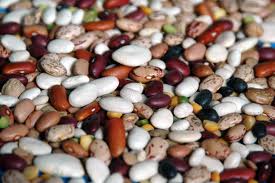
While part one focused on the frugal nature and ultimate practicality of rice, the other half of the famous rice and beans equation focuses more on nutrient density. For a long time people have erroneously thought that staple starches are incomplete proteins. Not true, even though many cultures have a tradition of combining a legume with whole grains. That is because beans, peas, and lentils have lots of nutrients, not just protein that complements rice.
Poor Man’s Meat
Beans are often thought of as what poor people eat when they can’t afford meat, and that social stigma has led people to believe that plant protein, including beans, is inferior to meat and dairy. Not so. Not only is the protein just as good, more importantly, the overall package is much healthier. Here’s what beans offer:
  • carbohydrate: due to some of the carbohydrate being resistant starch, this is slow burning energy that lasts a long time.
  • fiber: fiber is absolutely necessary for health, and the average American gets something like 12g a day compared to the 75g or so we evolved with.
  • protein: plant protein is more easily digested, and a better balance of amino acids.
  • phytochemicals: while not as powerful as green vegetables, beans have plenty of disease fighting phytonutrients.

Here is what Dr. Fuhrman says about the nutritional power of beans:
Beans (and other legumes as well) are a powerhouse of superior nutrition, and the most nutrient-dense carbohydrate source. They act as an anti-diabetes and weight-loss food because they are digested slowly, having a stabilizing effect on blood sugar, which promotes satiety and helps to prevent food cravings. Plus they contain soluble fiber, which lowers cholesterol levels.14 Beans are unique foods because of their very high levels of fiber and resistant starch, carbohydrates that are not broken down by digestive enzymes.  Fiber and resistant starch not only reduce the total number of calories absorbed from beans, but are also fermented by intestinal bacteria into fatty acids that help to prevent colon cancer. Eating beans, peas, or lentils at least twice a week has been found to decrease colon cancer risk by 50%. 15,16 Legume intake also provides significant protection against oral, larynx, pharynx, stomach, and kidney cancers.17”
In contrast, animal foods contain protein that appears to be disease promoting according to T. Colin Campbell, saturated fat and cholesterol. All bad. Beans FTW!

Tuesday, March 6, 2012

Why Rice and Beans?


Part 1: Rice

The fasting element of Lent made me think about what the majority of the world’s population has always eaten, which is a starch based diet with the addition of seasonal vegetables and fruits. A quick look at the omnipresent Wikipedia shows that the three most important staple crops for homo sapiens are rice, wheat and corn, in that order. Rice just edges out wheat currently, providing 20% of the human energy supply. But I think that if you look at the long history of rice cultivation over large areas of Asia you could argue that rice is the most important human food. 
Out of respect for this amazing grain that has sustained human culture and held together body and soul for our entire history, it will become my staple food for the duration of Lent. It helps that I like it. I always prefer brown rice for its chewy texture and nutty flavor, but some dishes require or prefer white rice. I think I will try some different varieties of rice to compare and learn over the course of this Lent.
Rice is very versatile, it can be used as the base for many different variations of rice and beans, and complement many different vegetable dishes as well. This fits in very well with my Lenten goals of dietary simplicity and nutritional density. 
Thanks to this versatility, I can use the same staple and create a frugal monotony of the same basic dish over and over again. This simplicity is like what most people around the world due out of necessity. But here in California I am inundated with choice. By limiting my staple to just rice, I live more like most humans always have. What’s for lunch/dinner? Rice. Simple.
But there is also a purely selfish motive buried in here too. While I am pushing specific goals aside for Lent, I still do have the triathlon season goal of attaining an ideal race weight and a much improved power to weight ratio. By introducing a sort of monotony in my staple starch, I can put a damper on appetite. Variety encourages eating more. If you are a little bored with your food, you eat when you’re hungry, and stop when you’re done. A more extreme version of this method is found as a subset of the McDougall Program called Mary’s mini. A short term approach to focus you in on the basic dietary principles, Mary’s mini has you pick one staple starch and focus all of your meals around it, just as many human populations have done. Will the monotony of the rice overcome the diversity of foods I can eat with it? Will I achieve race weight by eating rice? That’s why I consider Lent an experiment, we’ll see.

Saturday, March 3, 2012

First Feast Day

After a successful week of rice and beans and rice and vegetables, I took my first feast day: vegan Greek pizza and beer. Now it's time to get back to Lenting. I made a pizza and topped it with Heart Healthy Pizza garbanzo sauce. Fantastic! The toppings were as much spinach as I could balance on top, mushrooms, red onion, kalamata olives and the Happy Herbivore's vegan feta made with tofu. The tofu feta was a real surprise, very tasty and quite unique. The beer was Racer 5 from The Bear Republic brewery of Healdsburg, also very tasty.

Now, back to rice and beans. No more beer and pizza!

Sunday, February 26, 2012

Lent Feast

As indicated in my Lent rules post, one day a week the disciplines can be relaxed. Actually, that has happened for a few days now since I am on a vacation. I will count the weeks as Monday through Sunday for my five bunches of greens. I will plan my one day off for Sunday, unless there is an interfering event, like this coming weekend. Family wine tasting and feasting means I will switch the feast day from Sunday to Saturday. Same as this weekend, where my vacation ended. Boo for end of vacation, but the regular routine will make Lent a little easier.

Feast Day Menu
Maryland's Kale
Vegan Crab Cakes
Rice
Fruit Salad

So the feast day feast was great! And it wasn't completely a feast either, as I made great progress on five bunches of greens and tried a new dish that will become a staple as Lent continues. In this case it is Maryland's Kale from The Everyday Happy Herbivore. The kale is cooked simply, with just sliced onions, garlic, Old Bay, and lemon. I cooked it longer than the recipe calls for because I like my greens well done, and I'm at altitude. Like the Carolina Kale, this would make a great main dish by adding beans and using it to top rice. I think I'll try adding mushrooms as well.

But the feast part was Lindsay's recipe for vegan crab cakes that stole the show. Made with tofu, oyster mushrooms, well seasoned and topped with tofu remoulade, they were fantastic! A great dish for when you have the time and energy for something a little fancy. Bravo Lindsay!

Next up:
Week (shortened) in Review
Can I pro-rate my five bunches of greens, since the week started on Wednesday? 'Course I can. It's my Lent after all.

Saturday, February 25, 2012

The Lenten Experiment


        The usual way Lent was organized according to the all knowing elves at Wikipedia was with three practices, or disciplines: Fasting, Prayer and Almsgiving. I am modifying Fasting and Prayer to suit my own goals with this year's experiment. Rather than a specific goal to achieve, or a result I wan't to have, I am focusing on the process and trying to create a few habits. Some are new, others have slipped away over time.

Prayer
        I am not using prayer in a religious sense, but instead as a time for meditation and reflection. This is a practice that comes and goes in my life. I meditate for awhile, then start to "forget", and it all disappears. So daily meditation will be the goal. The style that I am going to experiment with Mindfulness Based Stress Reduction (MBSR) which comes from the Buddhist practice of Vipassana, or insight meditation. I find it attractive both for the goal oriented beginning of stress reduction, but also because the practice has a long tradition behind it to go much further than symptomatic stress relief. Reflection will come in the form of writing and journaling, ideally daily, both online and off. In past years I have made interesting discoveries with this Lenten experiment, I hope the same will happen this year.

Fasting 
Traditionally, fasting meant a vegetarian diet, but I already do that. So, in the tradition of conservation and reducing luxury, I will eat the way most people of modest means do: Rice and Beans, and Rice and Vegetables. My breakfast will remain the usual oatmeal, but all lunches and dinners will be some variation of the above.

In my own variation of using Lent as an experiment, I will change my diet a little more toward Dr. Fuhrman’s version of superfoods. I just read his new book Super Immunity, and I want to strengthen my immune system. Thanks to my recent bout with pneumonia, I learned that my immune system is not as strong as I thought. So the discipline will be to eat five bunches of his top ranked leafy greens every week. I have eight to choose from, so that will most likely be dinner every night.

Copouts and Cheating

Since I make up my own rules, I added a little variation I found used by some traditions. You get to take one day off from the disciplines a week. Traditionally this was the sabbath day, which was conceived of as a mini Easter or resurrection, where one could feast again. I think it was to help people maintain their motivation and will to get through six weeks. I will allow myself the same escape route on Sunday. 

Making up your own rules? Yeah, buddy! It’s good to be the king.

Anybody else use the Lent season in a similar way? What do you do?